Blog-EN

Not everything that’s true is the whole story

Why I started following coaches again

Lately, I’ve found myself following more coaches, teachers, and voices in the field of consciousness again. Not because I’m searching for new answers. Not because I want to compare myself to them. And certainly not to mindlessly consume more content.

Something else is happening.

I notice that my attention is naturally drawn to the way people communicate their insights. Not only what they say, but more importantly, from which layer they are speaking. Which aspect of reality are they revealing? Which part of the landscape becomes visible through their words? And perhaps even more importantly: which part unintentionally remains out of view?

This is where my attention naturally wants to go right now. Not because I consciously decided it should, but because it seems to align with what life is currently asking of me.

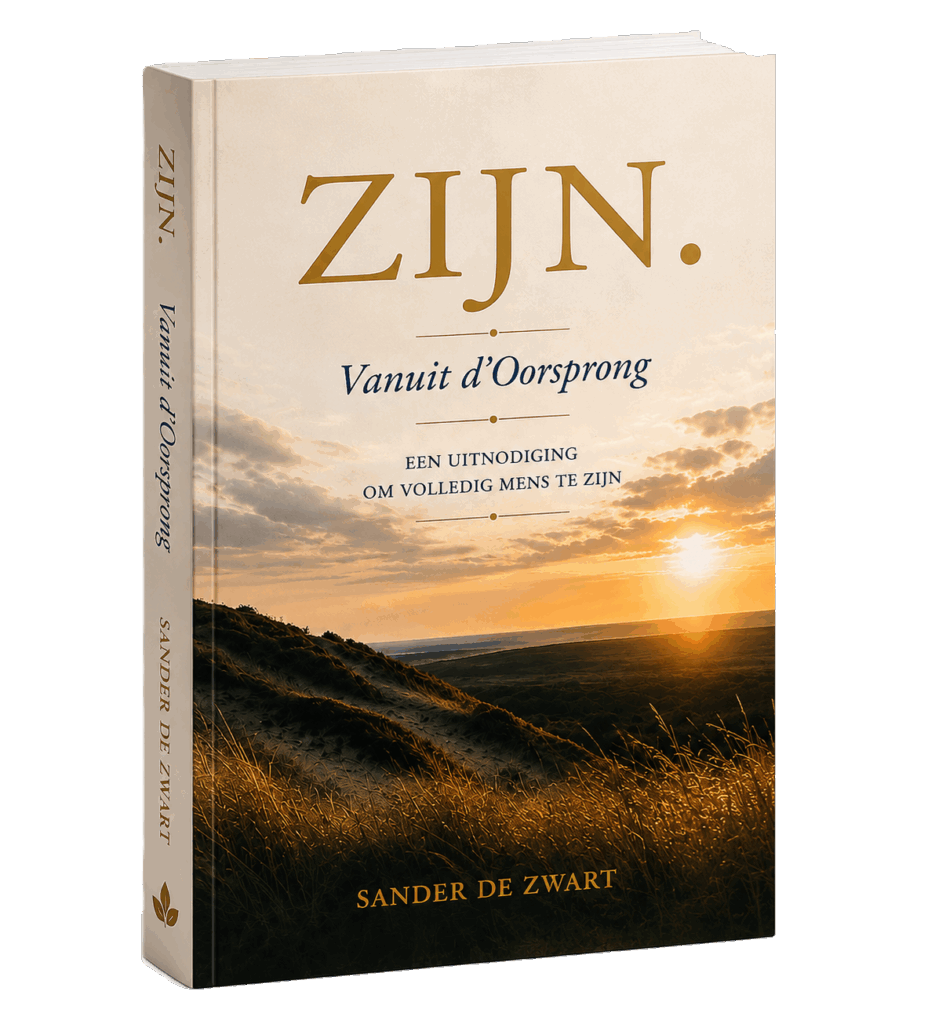
While writing Zijn. Vanuit d’Oorsprong (Human Being. From the Origin), I increasingly discovered that multiple perspectives can all be true at the same time. Science, psychology, philosophy, religion, and spirituality often describe the same landscape from different viewpoints. The problem rarely arises because a perspective is false. It arises when we forget that every perspective illuminates only part of the whole. That’s when we begin to mistake the map for the territory.

That realization fundamentally changed the way I listen.

Listening to what isn’t being said

Today, I listen very differently than I used to.

I no longer listen only to the content of a message. I also listen for what isn’t being said. Not because I’m looking for flaws, but because I’m curious where a message might become more complete. Almost everything I come across contains truth. In fact, I often find it inspiring and deeply valuable. Yet sometimes I sense that something is missing. Not because the message is wrong, but because a layer of nuance is absent. And very often, it is precisely that nuance that determines how a message ultimately lands.

We live in a time where powerful quotes, short videos, and inspirational sound bites spread across the world within seconds. That’s beautiful. Yet every simplification carries a certain risk. A truth that loses its context can begin to live a life of its own—not because the person sharing it intended that, but because the listener unconsciously fills in the missing pieces.

Not correcting, but completing

I feel that this has become an important part of my own mission. Not to correct people. Not to point out everything that’s incomplete. And certainly not to become some kind of spiritual police officer constantly searching for imperfections.

Ironically, when I’m not feeling fully grounded myself, I can recognize that tendency within me too. In those moments, judgment speaks louder than curiosity.

But when there is relaxation something entirely different happens. Then there is space to look gently. The conversation is no longer about right or wrong. It becomes a conversation about wholeness.

When desire becomes an escape

Recently I came across a message encouraging people to focus their attention exclusively on what they wish to create. I understood exactly what was meant. And in many ways, it’s true.

Our attention has tremendous influence. Yet at the same time, I felt something was missing.

Not because the message was incorrect, but because it could unintentionally suggest something else. That whatever is arising right now might be better left unfelt. That sadness belongs to a lower vibration. That uncertainty should be overcome as quickly as possible. That we first need to raise our frequency before life can truly begin.

And that is exactly where a much more interesting inquiry begins for me.

How often are our desires actually subtle ways of moving away from what life is showing us right now?

How often do we pursue a higher state of consciousness because we have quietly rejected the one we’re already in?

How often do we use spirituality simply to feel better, while life may actually be inviting us to become fully present with how we already feel?

These are not conclusions. They are questions. Questions I’ve been asking myself with increasing honesty over the past few years.

Even spirituality can become an escape

I love meditation. I love breathwork. I love silence. All of them have an important place in my life. Yet I also discovered a subtle trap.

How often do we begin the day believing we first need to meditate, first need to raise our energy, first need to enter the right frequency?

And how rarely do we ask the opposite question:

  • Why didn’t I simply wake up in that desired state?
  • What might my body be trying to tell me this morning?
  • What genuinely wants to be felt today?

Not every moment of restlessness is a mistake. Not every heavy emotion needs to be repaired. Sometimes life simply asks for our full presence.

Presence is not a technique

Perhaps this has been one of the most significant shifts that occurred while writing my book. For years, I believed presence meant deliberately directing my attention toward the present moment.

Until I discovered something much more subtle. Presence arises when your attention naturally aligns with what genuinely wants to unfold through you.

Sometimes that’s silence. Sometimes it’s an intense conversation. Sometimes it’s a business meeting. Sometimes it’s grief. Sometimes it’s building a company. Sometimes it’s doing absolutely nothing.

The form does not determine the quality of consciousness. Alignment does.

From that moment on, my understanding of distraction changed as well. Distraction isn’t simply when your thoughts wander elsewhere. Sometimes what we call “distraction” is precisely where life is inviting us to go. Because what life asks of you is not necessarily the same as what the world asks of you—or what expectations, obligations, or social conditioning ask of you.

Learning to distinguish between those voices requires discernment. And that distinction isn’t always obvious. Sometimes you simply don’t know. Is this an escape… or is this the movement that truly belongs?

There is another layer as well. The ego is remarkably skilled at building convincing arguments for its own preferences. It can effortlessly explain why one choice is exactly the right one and why another simply isn’t appropriate right now.

But a convincing argument does not automatically lead to the most authentic choice.

Realizing this brought me far more gentleness. Less urgency to immediately define everything. More willingness to keep listening.

Consciousness stopped being a project. It became a relationship with life itself.

The responsibility of the messenger

People often say that what someone does with information is entirely the receiver’s responsibility. There is certainly truth in that.

Every individual remains responsible for their own interpretation. But that isn’t the whole story. The messenger carries responsibility as well.

Not only for the content of the message, but also for the space in which the message is received.

Nuance invites nuance. An open question invites inquiry. An absolute statement often invites either belief or rejection.

That is why I increasingly try not only to share what is true, but also from which layer it is true—and where the boundaries of that particular perspective lie.

Not to make people doubt. But to help them remain curious.

The invitation

Perhaps this is ultimately the invitation of Zijn. Vanuit d’Oorsprong. Not to collect more truths. But to learn to see more completely.

Not everything we hear needs to be immediately believed or dismissed. Sometimes the most loving question is simply:

What is still missing?

Perhaps conscious presence has very little to do with meditating for twenty minutes each day. Perhaps it has everything to do with the quality with which we meet each moment.

What are you feeding yourself with each day? Which stories do you still believe?

Which desires genuinely bring you closer to yourself? And which desires have quietly become elegant ways of moving away from what life is asking you to see?

Where does fear still speak louder than your inner wisdom? Where does an idealized image of who you think you should become prevent you from being fully present with who you already are?

I’ve noticed that these questions help me remain present. Not on a journey toward becoming a better version of myself. But in becoming increasingly available to what life wants to express through me today.

Perhaps wisdom doesn’t begin with collecting more truths. Perhaps it begins with recognizing that not everything that’s true is complete.
The soul recognizes itself ahead

In the world of personal development, we tend to label many things as projection.

There is a great deal of truth in that. We constantly color reality through the lens of our own experiences, beliefs, and conditioning. What we see is rarely just the other person; it is always, to some degree, a reflection of the way we perceive the world.

Yet over the past few days, a subtle distinction came to me that changes everything.

Perhaps we don’t only project our shadow.

Perhaps we also project our potential.

When someone deeply moves you

Sometimes you meet someone who stirs something within you.

You can’t quite explain why, but something shifts. You feel admiration, awe, or quiet reverence. There is simply something about that person that touches you deeply.

Perhaps the soul recognizes its own longing in fulfilled form.

It doesn’t merely see another person.

It recognizes a possibility of itself.

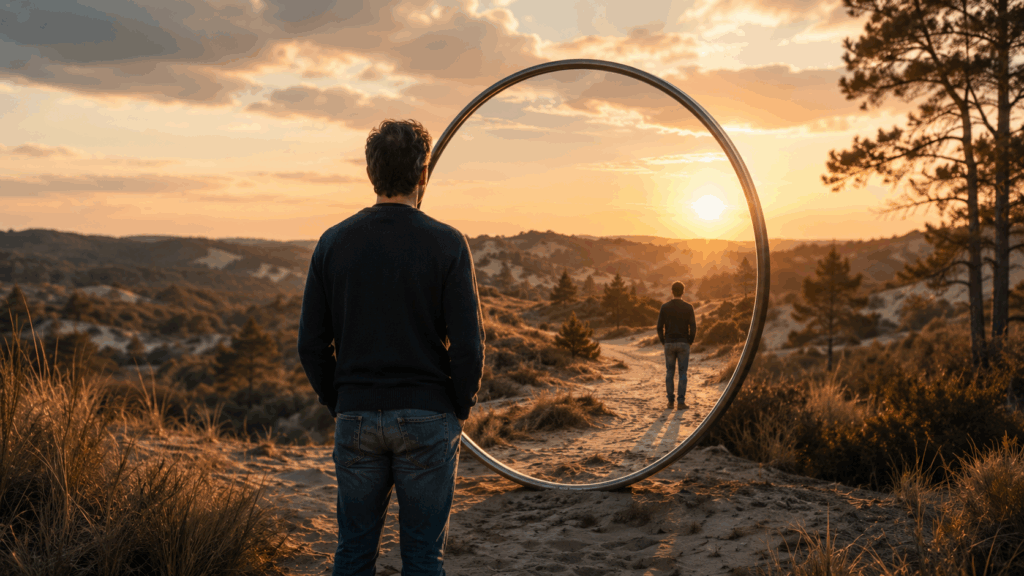
Almost as if it recognizes itself ahead of time.

This offers a very different perspective from the idea that projection is only about unresolved wounds or unconscious patterns. Maybe that is exactly why certain encounters affect us so profoundly. Not because of what the other person does, but because they embody something we already recognize deep within ourselves.

Two Lenses, One Reality

From that moment on, a choice emerges.

When we look through the lens of our essence, something awakens. Curiosity arises. Inspiration. A quiet form of courage. Something within whispers:

“This lives in me too.”

The other person is no longer a benchmark, but a reminder. Not of who we should become, but of what has always been present within us, quietly waiting to be expressed. But when we look through the lens of conditioning, that very same encounter can evoke something entirely different.

Irritation, resistance, jealousy, envy or even the urge to diminish the other person. Not because they are doing anything wrong, but because their presence exposes something we have not yet dared to live ourselves.

The outer world hasn’t changed.

Only the lens through which we are looking has.

The source of perception

What is still seeking to mature within us has the power to color the way we perceive the outside world.

What we interpret as irritation, resistance, or judgment often reveals just as much about the observer as it does about what is being observed.

That doesn’t mean every perception is projection.

Sometimes we genuinely recognize that someone is overcompensating. That their words and their presence don’t fully align. That they are trying to compensate for something they have not yet fully embodied.

But the exact same conclusion can also arise from projection.

That is why the most interesting question isn’t what you see.

The deeper question is:

From which layer within yourself are you looking?

Perceiving is not the same as seeing.

Two people can witness the exact same situation and experience completely different realities—not because the facts are different, but because the meaning they assign to those facts emerges from a different inner place.

The soul or conditioning

Perhaps this is the deeper invitation.

When someone affects you, don’t immediately ask yourself what you think of them.

Instead, ask:

What is this encounter trying to awaken in me?

Perhaps you are not seeing an arrogant leader. Perhaps you are not seeing a competitor. Perhaps you are not seeing an annoying colleague. Perhaps you are seeing a part of yourself that has been waiting a long time to be fully lived.

From the soul comes inspiration. The soul recognizes something it longs to embody. From conditioning comes comparison.

The very same encounter becomes a reason for criticism, resistance, or self-doubt.

Maybe the real invitation is not to analyze the other person, but to become curious about yourself.

Not to dismiss every perception as projection, but to explore the place from which your perception arises.

Maybe we’ve understood projection too narrowly

Perhaps we have viewed the concept of projection too one-dimensionally for years.

As though projection were only about our shadow.

But what if we also project our potential?

What if the people who move us most deeply are not only revealing where we still carry pain, but also reminding us of who we already are?

What if our soul sometimes recognizes what our personality has not yet fully dared to live?

That thought has not left me since.

Perhaps the soul recognizes itself ahead of time.

Not as someone else.

Not as an ideal existing outside itself.

But as a remembrance of something already present within, quietly waiting to be fully lived.

Then every meaningful encounter becomes far more than a mirror of our shadow.

It becomes an invitation to take our own potential seriously.

And perhaps that is the most beautiful mirror another human being can ever offer us.

Not your shadow, but your unlived potential.

Who is actually the owner of your life?

Perhaps this is the question that sits beneath almost everything.

  • Leadership
  • Entrepreneurship
  • Personal growth
  • Faith
  • Relationships

Who is actually the owner of your life?

It seems like a simple question. Until you discover how often we unconsciously hand that responsibility away.

To systems. To circumstances. To our partner. To our employer. To a coach. To a book. To a religion. To our beliefs. To our fears.

Or simply to the expectation that someone else will tell us what the next step should be.

The employee who waits

Years ago, I noticed something inside organizations.

Some employees wait almost an entire year for their performance review to discover how they are doing. And when feedback finally arrives, it often feels like a surprise. Sometimes even an injustice.

  • “Why am I hearing this only now?”
  • “Why was this never mentioned before?”
  • “How was I supposed to know?”

Understandable questions. Yet rarely does someone ask:

  • Why didn’t I seek feedback earlier?
  • Why didn’t I check in along the way?
  • Why didn’t I take ownership of understanding where I stood?
  • Why did I wait for a review to discover how I was performing?

And that is where something interesting happens. Because on paper, you may be an employee. But in reality, you are the owner of your role.

Not of the company. Not of the vision. Not of the strategy. But of your contribution within it. The moment you truly realize that, something changes.

You stop waiting. You start asking. You start exploring. You take responsibility for the quality of your contribution.

Not because someone demands it. But because it is your work. Your responsibility. Your field of influence.

A job description is dead paper

A job description is ultimately nothing more than a collection of words.

  • Tasks
  • Responsibilities
  • Expectations

But words do not bring anything to life. People do.

  • The employee who takes initiative
  • The employee who thinks along
  • The employee who feels responsible for the whole
  • The employee who doesn’t simply execute, but takes ownership

That is where the difference emerges between meeting expectations and exceeding them. That is where purpose appears. That is where craftsmanship is born. That is where life enters the picture.

And perhaps the same is true for life itself.

Are you living your life or waiting for it?

What I see inside organizations, I see everywhere else as well.

People waiting, Waiting for a sign. Waiting for certainty. Waiting for permission. Waiting for validation. Waiting for the right moment. Waiting for the right partner. Waiting for more money. Waiting for more peace. Waiting for a better situation. Waiting for clarity about their purpose.

As if life must first provide something before they can fully show up.

And don’t get me wrong. Sometimes waiting is wise. Sometimes life asks for patience. But more often than we realize, we call something patience when it is actually postponement. We call something surrender when it is really avoidance.

We call something trust while deep down we are afraid to take responsibility for our own choices.

Because the moment you choose, there is no one left to blame.

The subtle addiction to external authority

I don’t only see this in the workplace. I see it everywhere.

  • Personal development
  • Entrepreneurship
  • Religion
  • Spirituality

People constantly search for someone who can tell them what is true. A coach. A therapist. A spiritual teacher. A book. A method. A belief system.

Not because they are weak. But because responsibility can feel uncomfortable. Because when someone else determines what is true, you no longer have to choose. You no longer have to doubt. To investigate. To fail. To discover.

You can simply follow. And following often feels safer than leading.

Jesus was not a Christian

Recently, I heard someone say:

“Jesus was not a Christian. He was a Jew.”

A historical fact. Yet it made me think.

Not about religion. Not about Christianity. But about authority. What was Jesus actually following? A system? An institution? A religion? Or a direct relationship with God?

What moves me most in the stories about Jesus is not that people followed him. It is that he seemed to live from a profound inner alignment. From a direct relationship. From an inner knowing. And that raises an interesting question:

  • What happens when relationship is replaced by system?
  • When the written word becomes more important than lived experience?
  • When external authority becomes more important than inner connection?

Something shifts. We begin to live from what others say is true. Rather than from what we deeply know ourselves. And I believe this does not only happen in religion. It happens everywhere.

The greatest spiritual trap

Perhaps one of the biggest misunderstandings about surrender is the belief that surrender means passively accepting life. That you simply receive whatever happens. That you have no influence. That you should stop participating.

It sounds spiritual. But it can also become a disguised form of passivity. A way of avoiding responsibility.

Because while you cannot control everything…You do influence a great deal.

  • How you show up
  • How you respond
  • The choices you make
  • The conversations you have
  • The questions you ask
  • The energy you bring
  • The meaning you give to your experiences

That is where freedom begins.

Are you giving life to life?

And perhaps that brings us back to the original question.

Who is actually the owner of your life?

Because just as a job description remains dead paper without the person who brings it to life…Life itself is merely a collection of circumstances until you enter into relationship with it.

Until you participate. Until you create something with it. Until you show up. Until you take responsibility.

Not for everything that happens to you. But for how you respond to it.

Perhaps that is what mature leadership really is. Not control. Not power. Not certainty. But ownership.

The willingness to be fully present with your life.

Not as a victim of circumstances. Not as a follower of external authority. But as someone who takes responsibility for their place within the whole.

Because in the end, perhaps only one question remains:

Not what life gives to you. But what kind of life you dare to breathe into it.

Two years of School for Authentic Wisdom

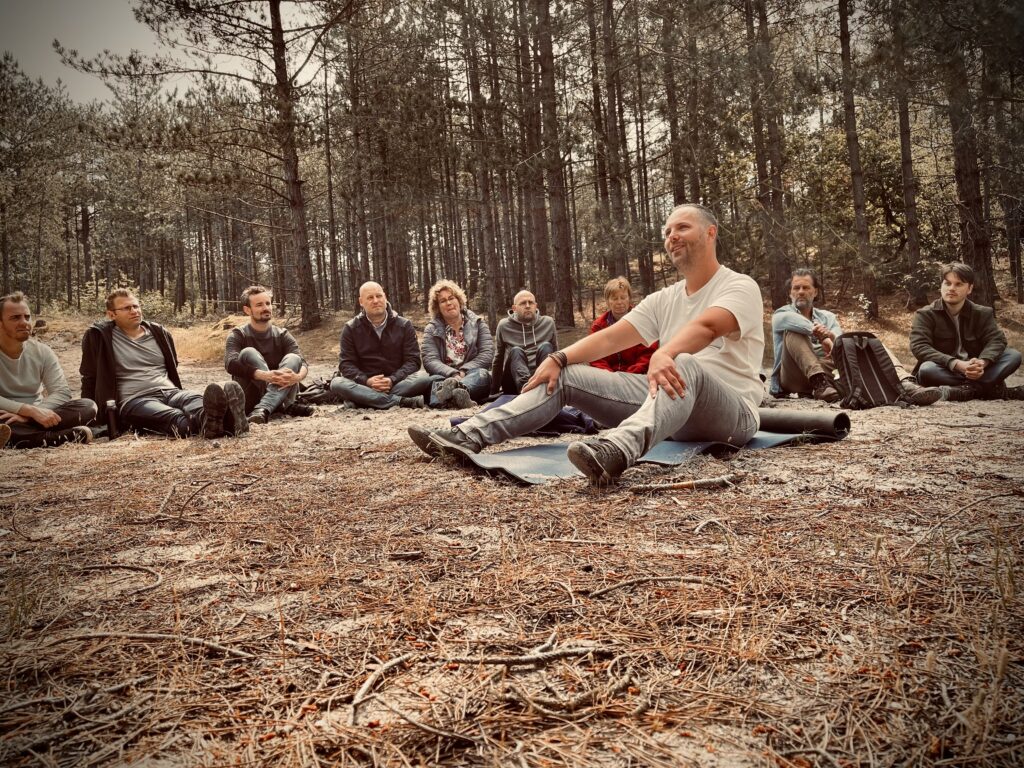
As I write this, I find myself looking at a photograph taken exactly two years ago.

June 13th, 2024.

The very first gathering of School for Authentic Wisdom. A small group of people in the woods. No big stage. No elaborate master plan. No guarantee of success. Only a shared desire to come closer to what is essential.

When I look at that photograph now, what touches me most is how little we could have known about everything that would unfold from that day.

The conversations. The encounters. The friendships. The breakthroughs. The lessons. The growth

But perhaps that is the essence of life.

Life rarely unfolds through complete certainty. You rarely see the entire path. You only see the next step. And then another. And another.

Perhaps that is what these past two years have taught me once again:

  • Ownership does not mean having everything under control.
  • Leadership does not mean knowing everything.
  • Trust does not mean never doubting.

It means being willing to show up.

Again. And again. And again.

Even when you cannot yet see exactly where the road is leading.

Because a meaningful life is not created by waiting until everything becomes clear. It is created by breathing life into what is already asking for your participation today.

And if there is one thing I feel grateful for, it is every person who has walked part of that journey with us over the past two years. Not because we know the way. But because together we keep discovering that the way is created by walking it.

And perhaps that is what Authentic Wisdom has always been about. ❤️

Mission is not what you do, it is who you dare to be

Why I didn’t talk about mission for a long time

Over the past few years, I’ve become increasingly uncertain about what mission actually is. Not because I believe in it less. If anything, perhaps because I’ve come to recognize so many different interpretations of it.

Use the word mission, and one person thinks of a greater purpose in life. Another hears ego—someone trying to make themselves seem important. Use the word calling, and some immediately think of God. Use the term soul mission, and for others it instantly takes on a spiritual or New Age connotation.

Perhaps that is exactly why I stopped talking about it for a while. Not because the subject became less important, but because I noticed that the words often received more attention than what they were actually pointing toward.

And I don’t see this happening only with mission.

It happens with almost everything.

  • God
  • Soul
  • Energy
  • Consciousness
  • Quantum
  • Calling
  • Purpose
  • Authentic Wisdom

They are all words attempting to touch something that exists before language itself.

And perhaps that is precisely the challenge. We try to describe with words something that can ultimately only be experienced.

A different doorway, the same message

When I look back on the past ten years of entrepreneurship, I see that I have been writing about the same thing over and over again—just through different entrances.

Sometimes it’s about consciousness. Sometimes leadership. Sometimes highly sensitive people. Sometimes men’s work. Sometimes entrepreneurship. Sometimes inner wisdom. And now, once again, mission.

A different doorway. The same room.

Because beneath all these topics lies, for me, the same question: How free are you, really, to be yourself?

Not as an idea. Not as a spiritual ideal. Not as a slogan on a website. But in everyday life. In your work. In your relationships. In the choices you make. In what you do and do not express. In how much space you allow yourself to truly be present.

What strikes me is that many people believe freedom comes from having more options. More money. More time. More success. More choices.

But I’m not sure that’s true.

Sometimes I get the feeling that freedom emerges when something falls away.

  • Less fear
  • Less tension
  • Less need to constantly prove yourself
  • Less need to meet other people’s expectations
  • Less struggle with what is

Perhaps that is also why the subject of mission keeps returning. Because deep down, many people sense that there is more alive within them than is currently being expressed. Not necessarily more success. Not necessarily more results. But more life. More movement. More of themselves.

The fear of serving the wrong kingdom

At the same time, I see how confronting this can be.

Because as you move closer to yourself, freedom is not the only thing that emerges. Doubt often appears as well—perhaps even a new kind of doubt.

Not the doubt about whether you are good enough.

But the doubt about whether you are seeing clearly.

  • Whether you are deceiving yourself
  • Whether your intuition is accurate
  • Whether your desire is pure
  • Whether you are following the right path

Whether you might be serving something that later turns out not to be true at all.

I think many people recognize this fear. Maybe not consciously, but somewhere beneath the surface. The fear of being mistaken. The fear of serving the wrong kingdom. The fear of fully committing to something that later proves to be a misunderstanding.

And honestly, I understand that fear. Because who ultimately possesses the truth? The scientist? The coach? The therapist? The minister? The spiritual teacher? I don’t know.

What I do know is that in ten years, I have never met anyone who sees the complete picture. We all look from our own position. Through our history, experiences, beliefs, talents—and our blind spots.

Perhaps healthy maturity is not about finding absolute certainty. Perhaps it is about learning to move without it.

Not recklessly. Not blindly. But also not paralyzed by the need to understand everything before taking a step.

Because that may be what I see most often.

Not that people feel no direction. But that they keep waiting for complete confirmation before moving.

As if it first has to be proven. As if it must be safe. As if success must be guaranteed.

Yet life, as far as I can tell, never offers that guarantee.

Maybe we’re all amateurs

Over the years, I’ve increasingly come to believe that nobody truly knows how to be human.

We all do our best. We try. We discover. We learn. We make mistakes. We begin again.

Sometimes I hear the saying:

“We are not human beings seeking a spiritual experience. We are spiritual beings having a human experience.”

Maybe that’s true. And if it is, then as souls we are still amateurs at being human. Because that is ultimately what we are doing here.

  • Discovering what it means to be human
  • To love
  • To make choices
  • To take responsibility
  • To lose
  • To begin again
  • To remain true to yourself while the world constantly seems to ask something different of you

Perhaps that is why I find myself less interested in people who claim they know how everything works. And more interested in people willing to explore. People who do not merely collect answers, but continue asking questions.

When survival makes way for living

For me, mission has less and less to do with what you do. And more and more with what becomes visible when you become freer.

  • When your body is less contracted
  • When old tension is released
  • When less energy is spent protecting, controlling, and surviving

Then space appears. And in that space, something remarkable happens.

You not only feel what is stuck. You also feel what wants to flow. You feel the urge to create. You feel the urge to meet people. You feel the urge to contribute. You feel the urge to step into the world.

Not because you have to. Not because anyone expects it of you. But because life itself wants to express itself through you.

For some, that feels like intuition. For others, a calling. For others still, the voice of God. Some call it purpose. Others call it passion. Personally, I care less and less about which word someone uses.

What interests me is the experience beneath it. That feeling that something within you wants to come into expression. Not from lack. Not to prove yourself. But precisely because you are no longer primarily occupied with surviving.

Your past does not have to disappear

Many people believe they must first completely resolve their past. That all blocks must disappear. That all patterns must be healed. That everything must be fixed. I don’t believe that.

Your past does not have to disappear. The emotional charge can soften. That is something different.

Because everything you have experienced has shaped you. The people you met. The mistakes you made. The choices that worked out well. The choices that hurt. The things you lost. The things you found.

All of it contributed to who you are today.

Freedom, in my view, does not come from erasing your past. Freedom arises when you stop fighting it. When you see that your history has shaped not only your wounds, but also your wisdom.

Not only your pain, but also your strength.

What I mean by Authentic Wisdom

When I speak of Authentic Wisdom, I do not mean that you possess the ultimate truth. Nor do I mean that you no longer need anyone else. Or that you should stop exploring new perspectives. Quite the opposite.

  • I believe in mirrors
  • In guidance
  • In new insights
  • In learning from others

But ultimately there comes a moment when you must ask yourself one question: What do I observe for myself?

  • Not: Who is right?
  • Not: Which philosophy has the truth?
  • Not: Who knows better?

But: What do I personally experience as true?

That takes courage. Because it means taking responsibility for your own life.

Why the School for Authentic Wisdom exists

Perhaps this is why people find their way to us. Not because we know their mission. Not because we possess the truth. Not because we determine which path they should follow. But because we create space for something many people have lost along the way:

  • Their own perception
  • Their authentic wisdom
  • Their own inner authority

Not as ego. Not as stubborn individualism. But as a deeper form of ownership. The responsibility to genuinely investigate what is true for you.

Where you are still holding yourself back. Where you are still living cautiously while life is already asking for movement. Where you are still waiting for certainty while life is inviting you to trust.

Because deep down, most people are not longing for more success. Not for more possessions. Not for more status. They long for something much simpler:

To be deeply fulfilled in the here and now. To feel free in their body. To feel completely free in their mind.

Not constantly living from tension, the need to prove themselves, or doubt. But being present. Open. Flexible. Authentic. And from that place, contributing something to the world.

Maybe missionis simply this

Maybe mission is not a destination. Maybe mission is not an assignment. Maybe mission is not something you have to find. Maybe mission is what becomes visible when survival slowly gives way to living.

When your past no longer pulls at you. When your mind no longer needs to control everything. When your body becomes free enough to feel what is truly right. When you stop waiting for absolute certainty before moving. When you allow yourself to be an amateur in this life. And go anyway.

Not because you are certain. But because you are alive.

And perhaps that is the simplest definition of mission I have encountered so far:

Not knowing. Yet going anyway.

Being on your path is different from doing it all alone

One of the questions I hear most often is:

“Am I on my path, or have I strayed from it?”

As if life were a navigation system. Turn left and you’re right. Turn right and you’re wrong. And the moment you leave the route, your only job is to find your way back.

The older I get, the less interesting that question becomes.

Not because you can’t lose your way. You absolutely can. I’ve experienced it myself.

But because there is a deeper question underneath it:

Who are you, regardless of whether you’re on your path or off it?

Because if you don’t ask that question, life can easily become an endless search for the right direction while gradually losing touch with the one who’s actually walking the road.

When I started losing myself

At the end of 2009, I was made redundant from a leadership position at the bank where I worked.

On the surface, I handled it well. I stayed professional, remained optimistic, and focused on the future.

But beneath the surface, something else was happening.

Old insecurities were being triggered. Old patterns resurfaced.

I was offered a career coaching program and genuinely believed I was searching for work that suited me better.

At least that’s what I thought.

Looking back now, I see something different.

My mind was still in charge.

And my mind was steering toward safety.

The outcome of the entire process was predictable: I concluded that the same role I had just lost was still the best fit for me—just at another company.

I applied for many positions.

Writing applications was easy.

Interviews came naturally.

Yet rejection followed rejection.

My mind couldn’t understand it.

“I’m saying all the right things. Why isn’t this working?”

Years later, I finally understood.

I wasn’t showing up as Sander.

I was showing up as a role.

I was very good at selling myself.

The problem was that I wasn’t selling myself.

The cost of living against your truth

Meanwhile, I continued working at the bank in a different position. At the recommendation of my employer, I also started a bachelor’s degree.

From day one, something inside me knew:

This is not my path.

But I kept going.

A family. A mortgage. Responsibilities.

So I pushed through.

Working during the day. Studying at night. Group projects. Exams.

Years of it.

Until my system finally said no.

In 2014, during a resit exam, everything went black.

A complete shutdown.

And at the same time, the wake-up call I desperately needed.

In that moment, I learned something I have never forgotten.

You can live against your own truth for far longer than you think.

The body is patient.

It adapts. It compensates. It keeps running even when the tank is already empty.

But sooner or later, the bill arrives.

Sooner or later, your system says:

“Enough.”

Finding my way back to myself

After my burnout, a different journey began.

Not because I wanted to become spiritual.

Not because I was looking for a new identity.

But because I wanted to understand who I really was.

I immersed myself in inner work.

Self-awareness. Healing. Consciousness.

I wanted to discover where I had lost myself along the way.

And perhaps more importantly:

How to find myself again.

Within two years, I started my first coaching business.

Looking back, it almost sounds like a fairy tale.

As if everything magically fell into place.

But that’s not the truth.

Even being on your path requires courage

Many people romanticize entrepreneurship.

Freedom. Being your own boss. Following your passion.

What they often forget is the responsibility.

Taking risks. Being visible. Handling criticism. Navigating uncertainty. Making decisions without guarantees. Facing financial pressure.

And continuously asking yourself:

Does this still align with who I am?

Or am I doing it because it feels safe?

Because everyone else is doing it?

Because a strategy says I should?

Because someone else succeeded with it?

The challenges don’t disappear when you’re on your path.

The nature of the challenge changes.

You are no longer exhausted because you’re fighting yourself.

You are stretched because you’re growing.

That is a very different experience.

Today, more than ten years later, there are still highs and lows.

Especially when you’re trying to create something that doesn’t already exist.

When there is no blueprint.

No proven formula.

Of course, you can learn from others.

Study strategies.

Seek inspiration.

But eventually, you have to come back to yourself.

Does this feel true for me? Does this fit who I am? Does this belong to the life I’m trying to create?

The misunderstanding of authenticity

One of the biggest misconceptions I see today is the belief that authenticity means doing everything alone.

As if asking for help automatically takes you away from your path.

As if coaching, mentorship, strategies, books, or guidance somehow make you less authentic.

That isn’t what I’ve learned.

In fact, when I look back over the past decade, I see countless people who have contributed to my growth.

Coaches. Mentors. Friends. Entrepreneurs. Teachers. Books. Trainings.

People who held up a mirror when I couldn’t see myself clearly.

People who asked questions I wasn’t asking.

People who saw something in me before I could see it myself.

The question is not whether you use what the world has to offer.

The real question is:

Do you remain in the driver’s seat?

Because you can become just as dependent on a coach as you can on your own mind.

You can lose yourself in a method.

  • A philosophy
  • A strategy
  • A religion
  • A spiritual experience
  • A business model
  • A belief system

The object changes.

The mechanism stays the same.

You hand over your authority.

Never fully lost

There is a Dutch expression that roughly translates to “being separated from God.”

These days, I see that differently.

The further you move away from yourself, the further you move away from that quiet inner knowing.

From presence. From awareness. From your essence.

But even during the darkest years of my life, that essence never disappeared.

And that may be one of the most important things I’ve learned.

Your essence doesn’t leave. You simply lose sight of it.

Your survival mechanisms become louder.

Your conditioning becomes stronger.

Your autopilot takes over for a while.

But somewhere beneath it all, the connection remains.

A small light.

A quiet reminder of who you truly are.

Even during my burnout, I wasn’t gone.

Perhaps I was further away from myself.

Perhaps survival was running the show.

But something inside me still knew.

And eventually, that part found its way back.

So… are you on your path?

Maybe that isn’t the most important question after all.

Maybe the real question is:

Who is holding the steering wheel right now?

  • You? Or your fear?
  • You? Or your conditioning?
  • You? Or the expectations of others?
  • You? Or the strategy you’re blindly following?

Because being on your path doesn’t mean doing everything by yourself.

And being off your path doesn’t mean you’ve completely lost yourself.

The real art is learning to receive support without surrendering your authority.

To learn from others without becoming a copy of them.

To walk alongside people without handing them the map of your life.

Because ultimately, you are the one who has to live your story.

Nobody can do that for you.

And perhaps that’s the most beautiful paradox of all:

Your path doesn’t become stronger because you walk it alone. It becomes stronger because you remain present while walking it.

“Experience life the fullest. Let’s walk each other home.”

Read more…

Maybe you’re solving the wrong problem

Why the lesson that frees one person can quietly harm another

One of the most confusing parts of personal growth is that the advice that transforms one person’s life can become another person’s trap.

For years I couldn’t understand why certain methods, coaches, trainings and approaches worked wonders for some people while leaving others frustrated, exhausted or even further disconnected from themselves. It seemed contradictory. After all, if something is true, shouldn’t it work for everyone?

The longer I’ve worked with people, and the longer I’ve walked my own path, the more I’ve come to see that growth is rarely about finding the right answer. More often, it’s about discovering whether you’re trying to solve the right problem.

The burden of seeing too much

Throughout my life I’ve been someone who notices things. I notice what isn’t being said. I notice tension in a room. I notice when something is off. I notice responsibilities that aren’t being taken. I notice what needs attention before others often realize it’s there.

For a long time, I believed this awareness was a gift. And it is. But it can also become a burden.

Because when you see what others don’t see, you start feeling responsible for it. When you sense what others overlook, the temptation arises to step in. To help. To fix. To carry.

Over time, that can become a way of life. You become the reliable one. The responsible one. The one who keeps things moving. The one who notices problems before they become crises. The one who quietly picks up what others leave behind. From the outside, this often looks admirable. From the inside, it can become exhausting.

Many of the people who eventually find their way to me know exactly what I’m talking about. They are caring people. Sensitive people. Thoughtful people. People with big hearts. They’ve spent years carrying more than their share. Not because someone forced them to. Because somewhere along the way they learned that this was what good people do.

When personal growth sends you in the wrong direction

Here’s where things become interesting. The personal development world often teaches lessons like:

  • Take responsibility
  • Stop blaming others
  • Be of service
  • Give more
  • Contribute
  • Think beyond yourself.

For many people, these are exactly the lessons they need. There are countless individuals who spend much of their lives protecting their own interests. They avoid responsibility. They expect others to solve their problems. They wait for someone else to take the first step. For those people, learning service, commitment and responsibility can be deeply transformative.

But what happens when someone has already spent their entire life carrying responsibility? What happens when someone’s default setting is already giving? What happens when someone’s first response to stress is not self-preservation, but self-sacrifice?

Then the medicine becomes poison. The lesson that heals one person quietly harms another. And this is where many sensitive, empathic and highly responsible people unknowingly lose themselves.

The trap I fell into myself

Looking back, I can see how often I searched for solutions that actually reinforced the problem. Whenever I felt stuck, my instinct was almost always to do more. Learn more. Work harder. Try harder. Improve more. Become better. Find another training. Find another coach. Take another course. Read another book.

At first glance, this looked like growth. But underneath it was something else. A deeply conditioned belief that movement equals value. That doing equals worthiness. That carrying more makes you important. That helping more makes you lovable. The strange thing is that personal growth can sometimes reinforce these patterns instead of dissolving them.

If your inner critic is already pushing you relentlessly forward, finding a coach who pushes you even harder may feel productive, but it often drives you further away from yourself. If your life is already defined by responsibility, adding more responsibility isn’t freedom. It’s simply a more sophisticated form of self-abandonment.

Not everyone needs the same lesson

This realization changed everything for me. Most people don’t need more growth. They need the right direction of growth.

Some people need to become more responsible. Others need to stop carrying responsibility that was never theirs. Some people need stronger boundaries. Others need softer walls. Some people need courage to act. Others need courage to stop. Some people need to learn service. Others need to learn self-respect.

The challenge is that we often seek guidance that confirms our existing patterns. The person who already overworks seeks another productivity coach. The person who already avoids action seeks another retreat. The person who already carries everyone else’s burden seeks another opportunity to help.

And so we end up becoming better at the very thing that’s exhausting us.

The question that changes everything

When people ask me what kind of work I do, my answer has become much simpler over the years.

I help people slow down enough to see what they’re actually doing. Not because slowing down is always the answer. It isn’t. But many of the people I work with have spent decades running on autopilot. They have become experts at helping others while quietly abandoning themselves.

They’ve learned how to carry. They’ve forgotten how to listen. They know exactly what everyone else needs. They have no idea what they need themselves. And until that changes, no strategy, no course, no breakthrough and no achievement will truly solve the deeper issue.

Where do you go under pressure?

Perhaps the most important question in personal development isn’t:

“What do I need?”

It’s:

“Who do I become when I’m under pressure?” Because that’s where your real pattern reveals itself. When life becomes difficult, do you automatically protect yourself and withdraw from others? Or do you automatically sacrifice yourself for everyone else? Do you become more focused on your own needs? Or do you completely forget they exist? Do you tighten your grip? Or do you disappear?

Until you understand your automatic survival strategy, you’ll keep searching for solutions that reinforce the very pattern you’re trying to outgrow.

Coming home to yourself

The older I get, the less interested I become in universal formulas. What helps one person may hurt another. What liberates one person may imprison someone else.

Growth isn’t about copying someone else’s path. It’s about understanding your own. The people this message is really for are the ones who have spent years carrying too much. The ones who always step in. The ones who see everything. The ones who feel everything. The ones who quietly hold the world together while wondering why they’re exhausted. If that’s you, perhaps the next step isn’t to give more.

Perhaps it isn’t to try harder. Perhaps it isn’t another strategy, another method or another push forward. Perhaps the next step is simply putting down what was never yours to carry. Because sometimes the greatest act of service is not giving more to the world.

Sometimes it’s finally giving something back to yourself.

Perhaps you’re tired of carrying it all

Tired of taking care of everyone, organizing, adapting, accommodating, and feeling responsible for everything and everyone around you.

Perhaps it’s time to stop searching for the next solution and simply return to yourself.

During a personal 90-minute Energy Update, I help you slow down, let go of what isn’t yours to carry, and reconnect with what your next step truly is.

Not from pressure. Not from obligation. But from a deeper connection with yourself.

You’re warmly welcome

👉 Visit the Experience life to the fullest page to discover how we can work together.

What if you’re not seeing what you think you’re seeing?

About awareness, truth, and the humility of not knowing

There is something that has been occupying my mind more and more lately. Not because I have found an answer, but precisely because I keep discovering how much I do not know. That may sound strange coming from someone who writes, speaks, coaches, and shares his insights with the world.

Because there is often an implicit assumption that the person speaking knows what he is talking about. That he sees something, understands something, and perhaps even perceives something that others have not yet seen. Yet the longer I engage with consciousness, the less certain I become of my own conclusions.

Not because I doubt everything, but because I see how limited every perception ultimately is.

The temptation of awareness

In the world of personal development, much revolves around awareness:

  • Becoming conscious
  • Learning to recognize patterns
  • Understanding trauma
  • Examining conditioning
  • Doing shadow work

And all of that has tremendous value. But there is also a risk hidden within it. Because awareness can subtly create the impression that we see clearly. That we understand what is happening. That we can draw conclusions about reality. That we are awake. And perhaps that is one of the greatest pitfalls of consciousness work.

Not that we see nothing, but that we begin to believe we see.

You are always looking through a lens

The reflections that eventually became this article were first recorded as voice memos. As I am speaking them, I am sitting in my car.

I see a BMW driving in front of me. A sign indicating eighty kilometers per hour. Wind turbines on the horizon. A farmhouse. A stretch of asphalt. That is my reality in this moment. Yet at the same time, I am exploring my thoughts about this article.

  • About consciousness
  • About attention
  • About truth

So where am I actually present? With the road? With the article? With my thoughts? With my surroundings?

The honest answer is: a little bit everywhere. And nowhere completely. Perhaps that is how consciousness actually works. Not as a perfect state of presence, but as a continuous movement of attention.

The blind spot within every insight

Every time I arrive at a new insight, the same question emerges:

How do I actually know this is true?

Not whether it feels right. Not whether it sounds logical. Not whether it gives me goosebumps. But whether it is true. Because beliefs can also give us goosebumps. Desires can feel real. Projections can resonate deeply. Which means that even our most profound insights may still be coloured by everything we do not yet see.

And that requires something that is sometimes missing in consciousness work: Humility.

Awareness is not the same as truth

I increasingly suspect that awareness does not mean getting closer to truth. Awareness simply means seeing that you are looking. Nothing more.

You become aware of the lens. But that does not mean the lens has disappeared. And perhaps it never fully will. Maybe being human means that we are always looking from a perspective. Always from a history. Always from a body. Always from a particular place in space and time.

From awareness to abidance

Perhaps freedom therefore does not lie in ever-increasing awareness, but in something else. Something my business partner Nico intuitively described as abidance.

The capacity to remain. Not in a conclusion. Not in a belief. Not in an identity. But in the living experience of not knowing. In the willingness to stay present without immediately turning every experience into a story. Not because nothing is true. But because you recognize that your view will always be limited. Abidance is not passivity. It is not indifference. It is not a lack of discernment. It is the willingness to rest in reality before interpreting it. To allow experience to be what it is before rushing to define what it means. Perhaps that is where wisdom begins. Not in certainty. But in openness.

Why I share this

Sometimes I wonder why I write at all. Why I publish articles. Why I share my perspective with the world. Because ultimately, that is all it is a perspective. An interpretation. Not absolute truth. Not a universal law. Not an endpoint.

And perhaps that is precisely why I continue to do it. Not to tell people how reality works. Not to convince anyone of my worldview. Not to become another voice claiming certainty in an increasingly noisy world. But to create space for questions. To invite people into their own inquiry. To encourage them to examine their own perceptions. Not so they become dependent on my insights, but so they develop trust in their own exploration. Their own experience. Their own direct encounter with life. Because in the end, it is not about what I see. It is about what you are willing to investigate. What assumptions you are willing to question. What beliefs you are willing to hold more lightly. And whether you are willing to stay curious when certainty would feel more comfortable.

Perhaps real wisdom begins exactly there. Not in having the answers. Not in reaching a final conclusion, but in having the courage to keep looking.

When the outside looks right, but the inside knows better

When I look back on my life, apart from being bullied and feeling excluded during parts of my childhood, I had a relatively stable upbringing. I did well in school, achieved decent results, and at a young age began building a life that many people would recognize as successful.

I met my wife when I was twenty, bought my first home at twenty-four, moved in together, got married, and not long afterward we had children. I had a good career at Rabobank, eventually growing into a leadership position, while being given countless opportunities to learn, develop, and expand my skills.

From the outside, the picture looked right

From the outside, the picture looked right. Yet there was something I noticed from an early age. Not so much within myself, but in the people around me. I saw how much energy was invested in meeting expectations. How hard people worked to build a certain life, achieve a certain status, or maintain a particular image. And while I could see that it sometimes brought them success, I sensed something else beneath the surface.

Behind many of those achievements was a kind of emptiness that was difficult to describe. It was as if the exterior kept becoming more polished, while the foundation underneath wasn’t always as solid as it appeared.

At the time, I couldn’t quite put my finger on it

I didn’t have the language for it yet. But somewhere deep down, I already knew that the outside could never be the most important thing.

And yet, I followed the same path.

Not because I cared much about status or recognition, but simply because I was capable of meeting the expectations placed upon me. When you’re good at something, it’s tempting to keep going in that direction. You receive appreciation, opportunities, and validation. Before you know it, you’re building a life that looks right on paper without regularly asking yourself whether it truly fits who you are.

That became painfully clear to me in 2014

Although everything appeared fine on the outside, I felt increasingly empty on the inside. Eventually, I burned out. Looking back, I don’t see that burnout as a sign that my life had failed. Quite the opposite. It was the moment I began to realize that success and fulfillment are not the same thing.

That period forced me to ask different questions. No longer: How can I grow further? But: What exactly am I growing toward? No longer: How can I sustain this life more effectively? But: Does this life still align with who I truly am?

That became a turning point

In the years that followed, I started my own coaching business. I invested in education, mentorship, and business coaching. I developed myself as an entrepreneur and, fairly quickly, built a thriving practice. Later came online programs and eventually a book. Once again, it seemed as though everything was unfolding according to plan. But something else happened as well.

Over time, I began recognizing the same dynamic all over again.

Not the exact same pattern, but the same underlying lesson

Because entrepreneurship can become another outside. A mission can become another identity. Even personal development and consciousness work can turn into something you unconsciously use to define yourself or prove yourself through. That realization played an important role in the creation of the School for Authentic Wisdom.

Together with Nico, I increasingly felt that we didn’t want to build just another organization focused primarily on growth, visibility, or success. There is nothing inherently wrong with those things. But they should never become more important than the place they arise from. The inside has to be right first. Not because life suddenly becomes easy when it is, but because otherwise you spend an enormous amount of energy maintaining something that doesn’t genuinely belong to you.

That may be one of the most important lessons I’ve learned over the past decade

Many of us try to organize the outside of our lives first, hoping that inner peace will follow. We believe that more success, more security, more income, or more recognition will eventually give us what we’re looking for. My experience has been the opposite.

When the inside doesn’t align, it takes tremendous energy to keep the outside together. Life becomes a project. There are always balls to keep in the air. Success becomes something that must be defended. Freedom turns into another obligation.

But when the inside does align, something shifts. Choices become simpler. Not necessarily easier, but more honest. You spend less energy maintaining an image because you’re no longer living according to expectations. You’re living according to what genuinely matters to you.

That doesn’t mean I’ve found all the answers. Far from it. I continue to encounter myself. I continue to discover new layers. I continue to see how tempting it is to attach value to the outside once again. But perhaps that’s simply part of being human.

For me, freedom is not about creating the perfect life

It’s about having the courage to keep listening when the inside knows something that the outside hasn’t caught up with yet. And perhaps, in the end, that’s one of the most important questions we can ask ourselves:

Am I building a life that looks good? Or am I building a life that truly fits?

We sometimes use awareness to hold on to a life that no longer fits

There’s something I’ve been seeing more clearly lately. Not only in our clients. Also in myself. And maybe that’s exactly why I can finally put it into words more honestly.

We often turn to coaching, meditation, breathwork, reflection and spirituality to reconnect with ourselves.

  • To find peace
  • To quiet the mind
  • To relax the body
  • To organize our thoughts
  • To regulate and release our nervous system

And there’s nothing wrong with that. In fact, it can be incredibly helpful. But there’s also a subtle trap hidden inside it.

Because sometimes we don’t use awareness to truly change…but to sustain a life that no longer feels aligned.

The reset that keeps everything intact

You meditate, you come back to yourself for a moment, you feel peace, space, clarity. And then you step right back into the exact same life.

  • The same patterns
  • The same habits
  • The same relationships
  • The same overload
  • The same way of working
  • The same tendency to abandon your own boundaries

And before you know it, your system is full again. Full of tension, noise, expectations, energy that was never truly yours to carry.

So you search for another reset. A session, a retreat, a meditation, a breathwork journey, a coaching conversation, a podcast, a book. Something to calm the nervous system again, something to empty the container, something to recover.

But if nothing fundamentally changes in your daily life afterward, that reset slowly becomes part of the problem. Not because the method doesn’t work, but because you are using it to keep your old life alive.

Awareness can become a comfort zone

We often assume awareness is always liberating. But awareness can also become a comfort zone. Especially when it stays trapped in the mind. Then you keep analyzing, reflecting, philosophizing, explaining, understanding.

  • You know your patterns
  • You know your trauma
  • You know your survival mechanisms
  • You know your nervous system

But are you actually living differently? Are you truly present in your body? Or have you simply become very skilled at talking about what you feel?

That’s an important distinction. Because it’s possible to become so occupied with awareness that it quietly becomes another strategy to avoid fully feeling. Avoid being present with discomfort, avoid listening to the body, avoid making the decision you already know is asking to be made.

At that point, awareness no longer becomes liberation, it becomes a refined form of postponement.

The body lies less easily than the mind

The mind is clever. It can explain, justify, spiritualize, delay, search for more information, keep exploring another layer. But the body is often far more direct.

  • It feels where you are holding yourself back
  • It feels where you continue crossing your own boundaries
  • It feels where you are carrying something that no longer belongs to you
  • It feels where you keep saying yes while your deeper truth says no

It feels where your soul slowly becomes smaller inside a life that still looks functional from the outside. And that is exactly where conscious presence begins. Not by trying to eliminate thoughts, but by staying with what is actually arising now.

  • In your body
  • In your breath
  • In your tension
  • In your truth

Which method you use is not the question

Meditation can help, breathwork can help, coaching can help, somatic work can help. Books, podcasts, contemplation, silence, nature… all of it can be deeply valuable. That is not where the problem lives.

The real question is:

From what energy are you using these tools?

Are you using them to become more awake inside your daily life? Or are you using them to recover, so you can continue living the exact same way afterward?

Are you using awareness to become more honest? Or to postpone the confrontation with your own choices a little longer?

Are you using these practices to transform your life? Or simply to cope with a life that no longer fits who you are becoming?

That is where the difference lives.

Many people want a different reality, but don’t truly want to change

That may sound harsh. But I don’t mean it harshly. I mean it honestly.

Many people long for peace:

  • For freedom
  • For clarity
  • For love
  • For spaciousness
  • For a life that feels aligned

And at the same time, they try to preserve their existing reality for as long as possible.

  • The same dynamics
  • The same obligations
  • The same identity
  • The same habits
  • The same environment
  • The same way of responding to life.

And then we secretly hope awareness will solve everything without requiring us to fundamentally move. But life doesn’t work that way.

If you desire a different reality, life will eventually ask you to become differently present within it. To make different choices, to set different boundaries, to respond differently, to listen differently, to live differently.

Not perfectly, but more honestly.

You can’t outsource what only you can live

  • A coach can mirror you
  • A therapist can guide you
  • A mentor can help you see what you cannot yet see yourself
  • A session can open something
  • A retreat can awaken something
  • An experience can be deeply transformative

But nobody can live your life for you. Nobody can come home and make the difficult decision on your behalf. Nobody can have the conversation for you.

Nobody can stop the pattern that is slowly draining you. Nobody can remain present for you when you become triggered.

Nobody can embody your truth for you.

That is your path. Your responsibility. Your ownership. And strangely enough, that is exactly where freedom begins.

Experience life to the fullest

For me, Experience life to the fullest is not about chasing a more spiritual identity.

It is not about creating the illusion of a perfect life. It is not about always feeling peaceful, clear, confident or “high vibration.” It is about daring to remain fully present with the life that is actually unfolding. Even when it hurts, even when fear arises. Even when old patterns try to take over again. Even when your body carries tension. Even when you don’t fully know what the next step is.

Presence is not something reserved for meditation cushions. Presence is how you live.

  • How you work
  • How you love
  • How you communicate
  • How you protect your boundaries
  • How you move through pressure
  • How you return to yourself when you temporarily lose yourself

Not a recovery moment, but a way of living

That is the deeper movement. Not endlessly recovering from a life that exhausts you. But learning to shape your life in a way where your presence can actually remain intact.

  • Not only resetting, but also integrating
  • Not only releasing, but also choosing differently
  • Not only gaining insight, but also embodying it
  • Not only understanding who you are, but also becoming willing to live as that person

And yes, that is what sessions, mentorship and guidance can support. But not so you become dependent on another person. Rather so you can start seeing more honestly where you abandon yourself…and how to return again. To your body, to your truth, to the present moment, to life itself.

The real invitation

Maybe this is the question that remains:

Are you using awareness to become more awake to life? Or are you using awareness to keep functioning inside a life you have already outgrown?

That question is not meant as judgment, but as a mirror. A loving one. And perhaps also a confronting one.

Because deep down, most people already know where they are still holding themselves back. Where they are numbing themselves. Where they keep telling themselves “later.” Where they are still waiting for more certainty, more clarity or more permission.

But life does not happen later. It happens here. Now. In this body. In this breath. In this choice. In this conversation. In this life.

Experience life to the fullest

Sander de Zwart

For entrepreneurs and leaders devoted to truth, presence and inner guidance.

“Experience life to the fullest.”

For Sander de Zwart, this is not a slogan.

It is a way of living.

Fully awake.
Fully present.
Fully human.
Fully here.

In your body.
In your relationships.
In your work.
In your leadership.
In the ordinary moments where life reveals who you really are.

A different kind of leader

Sander is a Dutch entrepreneur, guide and space-holder for a new kind of leader.

The American dreamer.
The doer.
The entrepreneur.
The pioneer.
The leadership expert.
The one who knows that the world does not need more noise, more pressure or more performance.

It needs something else.

More presence.
More truth.
More connection.
More love.

And love does not start as a strategy.

It starts within.

Bringing inner work into real life

This is where Sander works.

He helps people explore their inner world, not to disappear into it, but to bring it into life.

Into the boardroom.
Into the family.
Into the relationship.
Into the company.
Into the supermarket.
Into the conversation you would rather avoid.
Into the moment that triggers you.
Into the choice that asks for courage.

He helps you discover.
He helps you remember.
And he helps you apply.

Because an insight that does not change the way you live is only half an insight.

A spiritual truth that does not reach your voice, your hands, your nervous system, your decisions and your daily relationships has not fully landed yet.

Sander helps it land.

Not by fixing you.
Not by giving you another mask.
Not by placing himself above you as the one who knows.

He walks beside you.

As a guide.
As a mirror.
As a grounded Dutchman with both feet in the sand and his heart open to the mystery.

Human First

A father of two sons.
A partner to a beautiful woman.
A man living near the dunes of Schoorl, in the clean, quiet beauty of the Dutch coast.

Approachable.
Direct.
Warm.
Clear.
Human.

He can speak about Source, soul, mission, shadow and the magic of life and then look you in the eyes and ask:

“How will you live this today?”

That is his gift.

The mystical becomes practical

He brings the mystical back to the practical.

A trigger becomes a teacher.
A pattern becomes a doorway.
A conflict becomes a mirror.
A meeting becomes an initiation.
A breath becomes a beginning.

Not because life suddenly becomes easy.

But because you become more present inside it.

Everything is possible

“Everything is possible”, Sander says.

He brings the mystical back to the practical.

A trigger becomes a teacher.
A pattern becomes a doorway.
A conflict becomes a mirror.
A meeting becomes an initiation.
A breath becomes a beginning.

Not because life suddenly becomes easy.

But because you become more present inside it.

Vogelvrij

This is freedom.

Not freedom from life.

Freedom within life.

Vogelvrij.

A Dutch word that is almost impossible to translate.

Free as a bird,
but not disconnected.

Untamed,
but not ungrounded.

Fluid,
but not lost.

Free,
because you are deeply connected.

Connected to yourself.
Connected to others.
Connected to Source.
Connected to the greater whole.
Connected to the intelligence of life itself.

For Sander, connection is not something you need to create.

It is something you remember.

Everyone is already connected to everything.

Every person you meet is another expression of the same Self.
Another face of the same mystery.
Another mirror.
Another invitation to return to love.

Leadership from presence

And when that remembrance becomes embodied, leadership changes.

You stop leading from pressure.
You stop proving.
You stop pushing life into shape.

You begin to lead from presence.

From inner knowing.
From truth.
From love.
From the quiet place within you that was never separate from life in the first place.
A field for transformation

Sander does not do this alone.

He brings a team of professionals who understand this work from the inside out.

People who have been guided by him.
People who embody what they teach.
People who know that transformation is not proven on a stage, but practiced in the smallest moments of everyday life.

Together, they hold a field for leaders who are ready to discover, remember and live.

For those building the new.
For those who feel the world is asking for something deeper.
For those who know that outer change begins with inner space.

The map was always there

Sander will not hand you a map.

He helps you remember that the map has been alive inside you all along.

And then he helps you walk it.

In your body.
In your relationships.
In your work.
In your mission.
In the sacred, practical, magical reality of your everyday life.

You are welcome

From the dunes of Holland
to wherever in the world you are reading this:

You are welcome.

“Experience life to the fullest.”

That is the invitation.
That is the practice.
That is the magic.

Sander de Zwart
Experience life to the fullest
For entrepreneurs and leaders devoted to truth, presence and inner guidance.

School voor Eigen Wijsheid draait op SYS Platform SYS Platform - Website platform voor ambitieuze ondernemers